

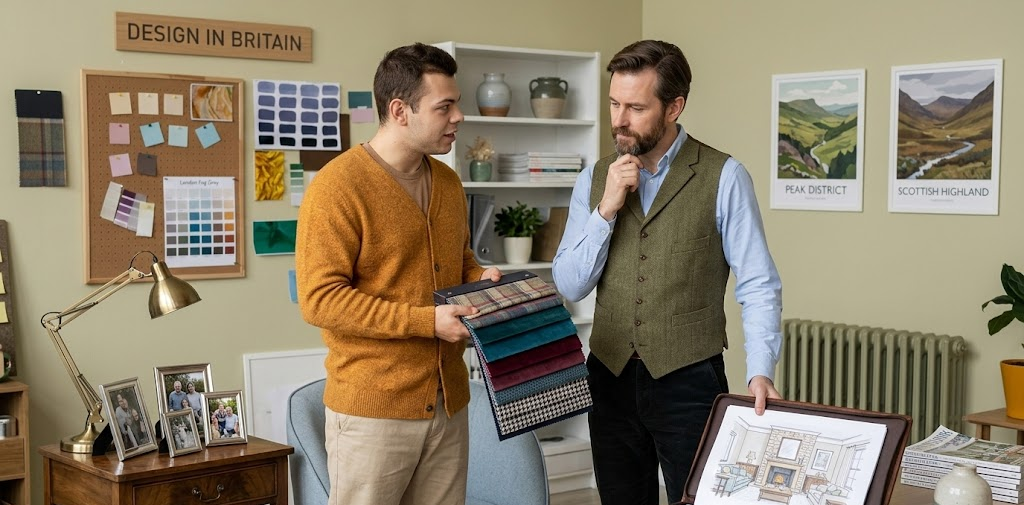
Many people think their home doesn’t feel right because they haven’t found the perfect sofa or the right shade of grey for the cushions.
But if you ask interior designers, they’ll tell you that the issue is rarely about individual pieces. It’s about how everything works together. A space that looks stylish but feels messy will never feel like a true home.
According to a report from Psychreg, approximately 18.8 million UK households need decluttering. This widespread problem means that even the best styling cannot create a calm or welcoming environment in cluttered homes.
Cosiness and organisation go hand in hand. A cluttered home can’t feel cosy, no matter how many candles you light or throw you drape over the sofa. A perfectly organised and thoughtfully styled home? That’s where warmth really lives.
Let’s look at seven things professional interior designers do and why each one is vital.
Home Styling Tips to Make Your Home Feel Cosy
Here are the seven home styling tips to make your home feel cosy and organised:
Tip 1: Start with a Floor Plan, Not the Furniture
Before designing a room, a designer considers how people will move through it. They think about where someone walks upon entering and where they want to sit. They also consider what the room needs to do. Many homeowners overlook this step and push furniture against the walls, which is common in home styling.
Bringing furniture away from the walls and creating a defined area in the centre makes the room feel more purposeful. It shows that the space has been thoughtfully planned, which contributes to a sense of cosiness. You cannot achieve this feeling just by adding accessories.
Tip 2: Use Fewer Things, But Choose Them Better
Designers style a room by removing items and not by adding more. Each object should have a purpose: it should either be useful, beautiful, or ideally both. Achieving this curated look often means skipping mass-produced, flat-pack furniture in favor of pieces with a bit of history. You’ll find hidden gems that add immediate warmth, texture, and story to a room. If you are looking to source characterful, pre-loved items locally, explore used furniture pieces that Kent has to offer.
A calm and careful room often has fewer items than expected.
Walk around your home and ask yourself: if this item were gone, would I miss it? If the answer is no, it’s taking up space without justification. Clear surfaces feel intentional and purposeful. Intention is what makes a room feel well-designed instead of decorated.
Tip 3: Get the Lighting Right Before Anything Else
Lighting is one of the most overlooked aspects of home design, and many homeowners get it wrong. A single ceiling light in the middle of a room can make a well-decorated space feel dull and impersonal. To create warmth, use different types of light: ambient light from a ceiling fixture, task light for activities like reading or cooking, and accent light from lamps or wall sconces at a lower level.
This is important because low-light sources create warm areas that attract attention and make a space feel cosy. Consider how restaurants feel different from offices; it’s mostly due to the lighting. Add at least one table lamp or floor lamp to any room that only has overhead lighting, and you’ll notice a big difference right away.
Tip 4: Make Storage Part of the Design
Homes look most stylish when everything is stored away, making it hard to see where things are kept. Good storage is an important part of design, not just an afterthought. When you plan storage well, like utilising fitted shelves, ottomans with lids, or furniture with hidden compartments; the room stays tidy without much effort.
Recent data shows that 29% of people in the UK use external storage to create more space at home. This illustrates that many of us have more belongings than our homes can hold, and just because these things are out of sight does not mean they are not a burden.
A messy home can never feel cosy. If there isn’t a logical place for things, they will pile up on surfaces. Messy surfaces ruin all your styling efforts. First, fix the storage issue, and the rest of the room will come together more easily.
Tip 5: Treat Your Outdoor Space as Another Room
Most homeowners decorate indoors and landscape outdoors as two separate projects. Designers don’t think that way; the garden is just another room, and the same principles apply: define the space, give it a purpose, anchor it with the right structure.
A proper timber outbuilding; whether that’s a home office, workshop, hobby space or just solid outdoor storage; does for a garden what a well-chosen sofa does for a living room. It gives the space a reason to exist.
If you’re ready to give your garden a proper design role, a made-to-order timber building is one of the most impactful shifts you can make. Elfords specialise in bespoke timber buildings and have been making them in Hampshire since 1982.
Tip 6: Let Texture Do the Work That Colour Cannot
Neutral rooms can feel rich and warm due to texture. Materials like linen, wool, velvet, rattan, wood, and aged leather reflect light differently throughout the day. This creates a visual depth that paint alone cannot achieve. Feeling comfortable involves both touch and sight.
When layering textures, focus on contrast. For example, place a rough jute rug under a soft linen sofa or a smooth ceramic lamp next to a chunky knit cushion. The contrast makes each material feel purposeful. If everything in a room has the same finish, no matter how lovely the individual pieces are, the room will feel flat.
For a clearer approach to combining materials well, take a look at this practical guide to layering textures.
Tip 7: Bring in a Professional Eye for the Rooms That Matter Most
Not every room needs a designer, but the ones you live in most do. The mistake most homeowners make is treating professional design input as a luxury; when actually the best-designed homes are the ones where someone thought carefully about how every element works together before anything was bought or moved.
Start with one room. Understand the brief, the light, the function. That single exercise changes how you approach the whole house.
The most practical thing you can do for a room you want to get right is get a designer’s read on it before you spend anything. Maison Home Interiors cover exactly this on their blog, worth reading before you commit to any major changes.
Conclusion
A home that feels cosy doesn’t come from shopping. It comes from choices about how you use the space, how you light it, how you store things, and how each room connects to your daily life. Being organised helps create cosiness, it’s the key.
You don’t have to change everything at once. Choose one tip from this list, apply it, and see how it changes your space. Good homes are built one thoughtful choice at a time.If you would like professional guidance tailored to your home, just contact Maison Home Interiors to start the conversation.

